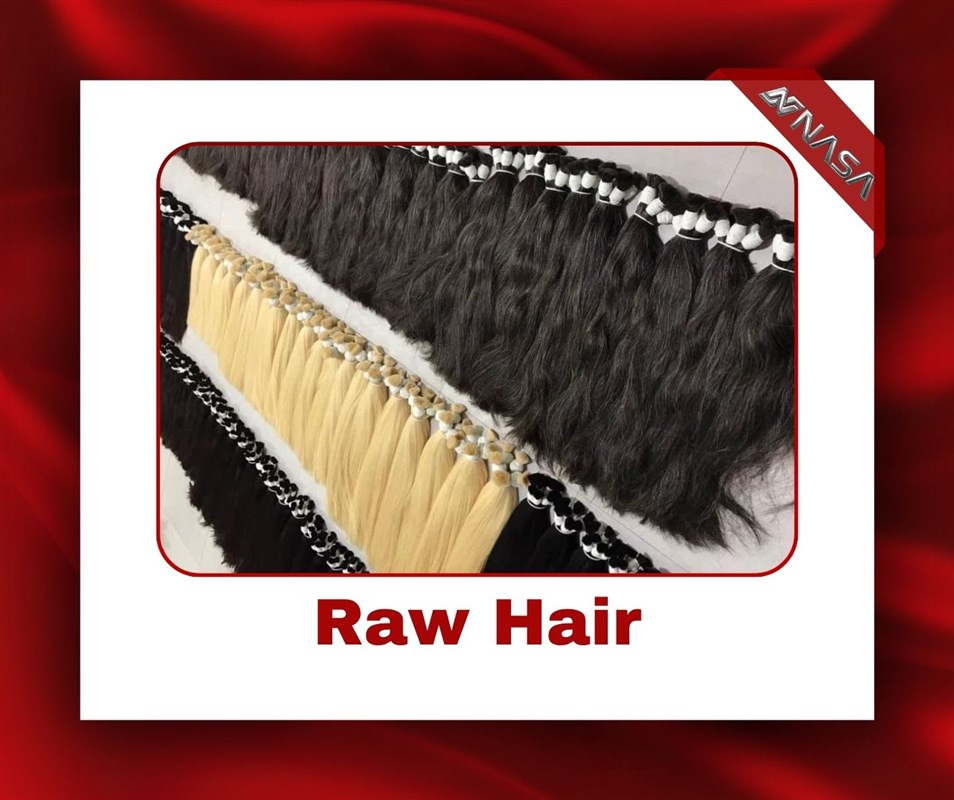
U-Tip Hair Extensions are a professional strand-by-strand extension format built around a pre-bonded, U-shaped attachment. Unlike wefts or tape panels, individual strands are positioned separately, giving stylists greater control over how additional length, volume, or color is distributed throughout the hair.
For salons, hair brands, and wholesale buyers, understanding the U-Tip attachment is just as important as evaluating the extension hair itself. Hair quality, bond consistency, professional application, and product specifications can all influence how the system performs in practice.
This guide explains the structure of U-Tip extensions, how the fusion application generally works, how they compare with other tip extension formats, who may be suitable for the method, and what professional buyers should evaluate before ordering.
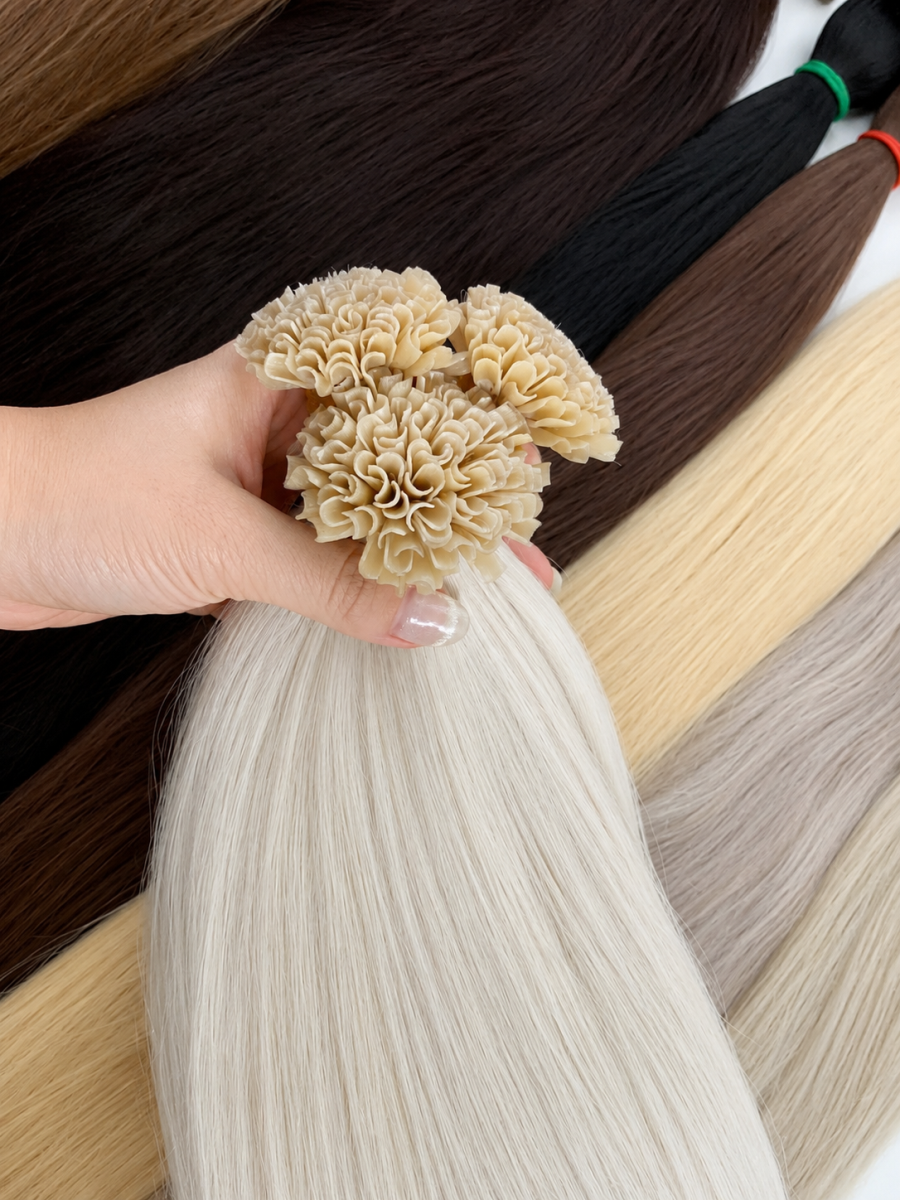
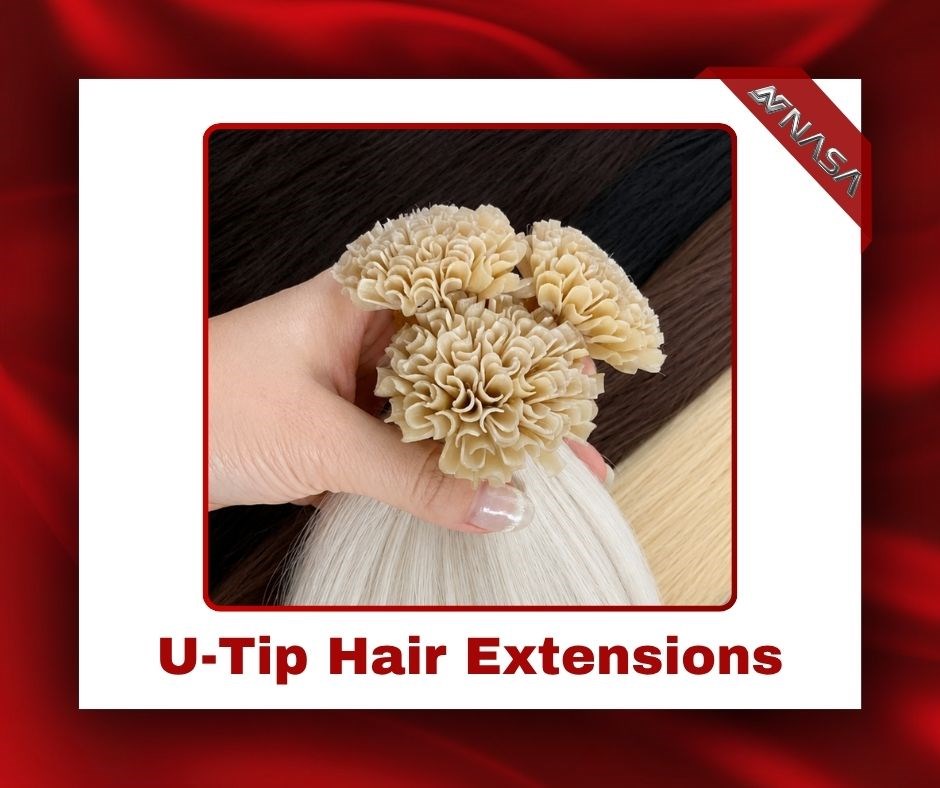
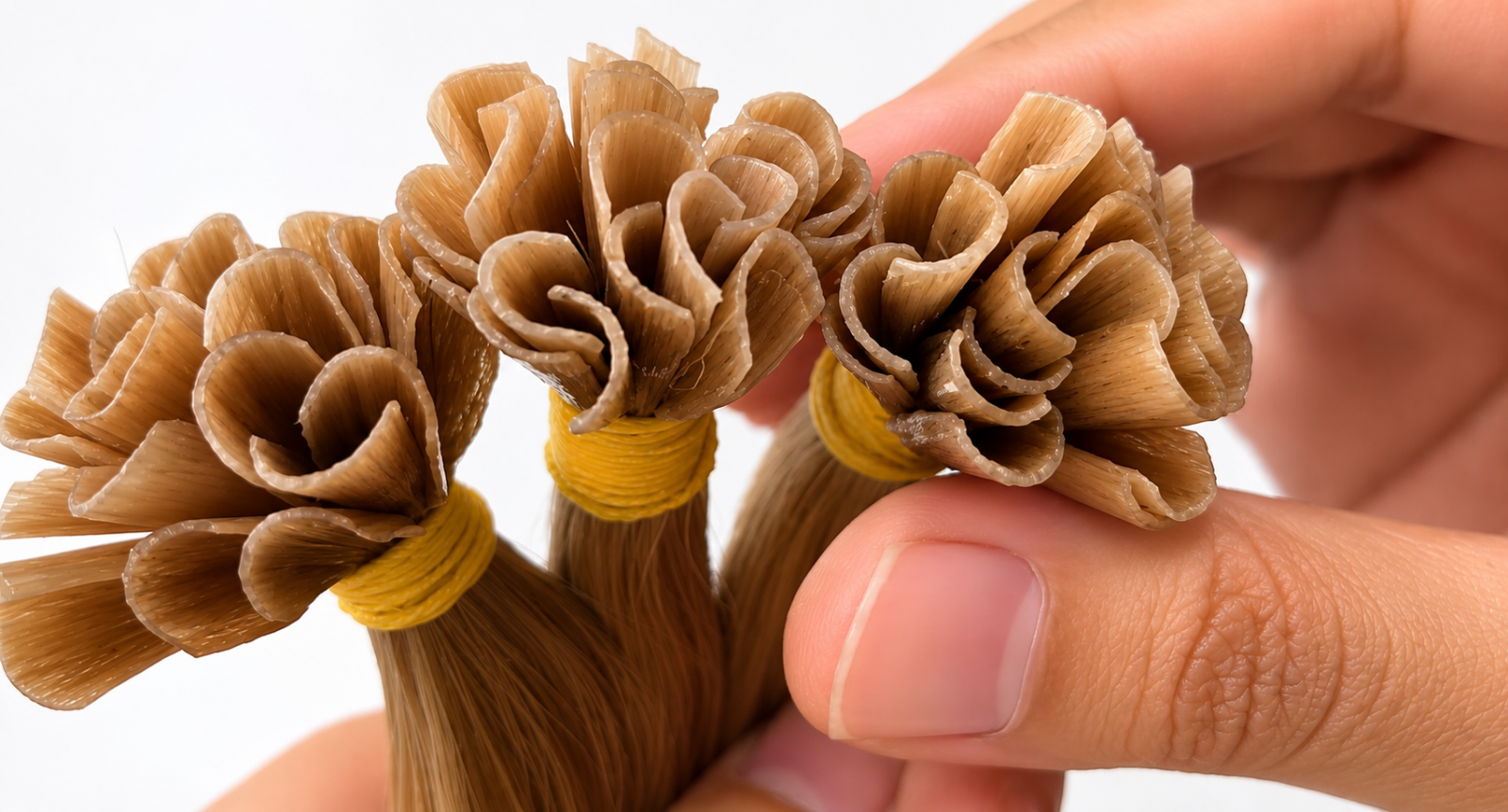
U-Tip Hair Extensions are individual extension strands with a pre-formed attachment at the top. The attachment has a curved, U-like profile, which gives the product its name.
They are also commonly associated with terms such as keratin fusion extensions, pre-bonded extensions, or nail-tip extensions, although terminology can vary across manufacturers and markets.
Unlike tape or weft systems that add hair in wider sections, U-Tips are applied strand by strand. This allows the stylist to control the placement and distribution of extension hair according to the desired result.
NASA Hair includes U-Tip within its tip and keratin hair extension range. Exact attachment materials, dimensions, strand weights, and other product specifications should still be confirmed for the specific product being ordered.
The defining feature of a U-Tip extension is its pre-formed attachment, which holds the extension hair together at the top in a curved, U-like shape.
During professional fusion application, the attachment is softened and formed around a controlled section of the client’s natural hair. Because the attachment becomes the connection point between the extension and natural hair, its shape and finishing are relevant when evaluating product consistency.
For salons and buyers reviewing samples, comparing several strands can help reveal whether the attachments are reasonably uniform and consistently connected to the hair.
U-Tip Hair Extensions are commonly associated with professional fusion application. Instead of using a continuous tape panel, weft track, or bead-based attachment, each strand is connected individually.
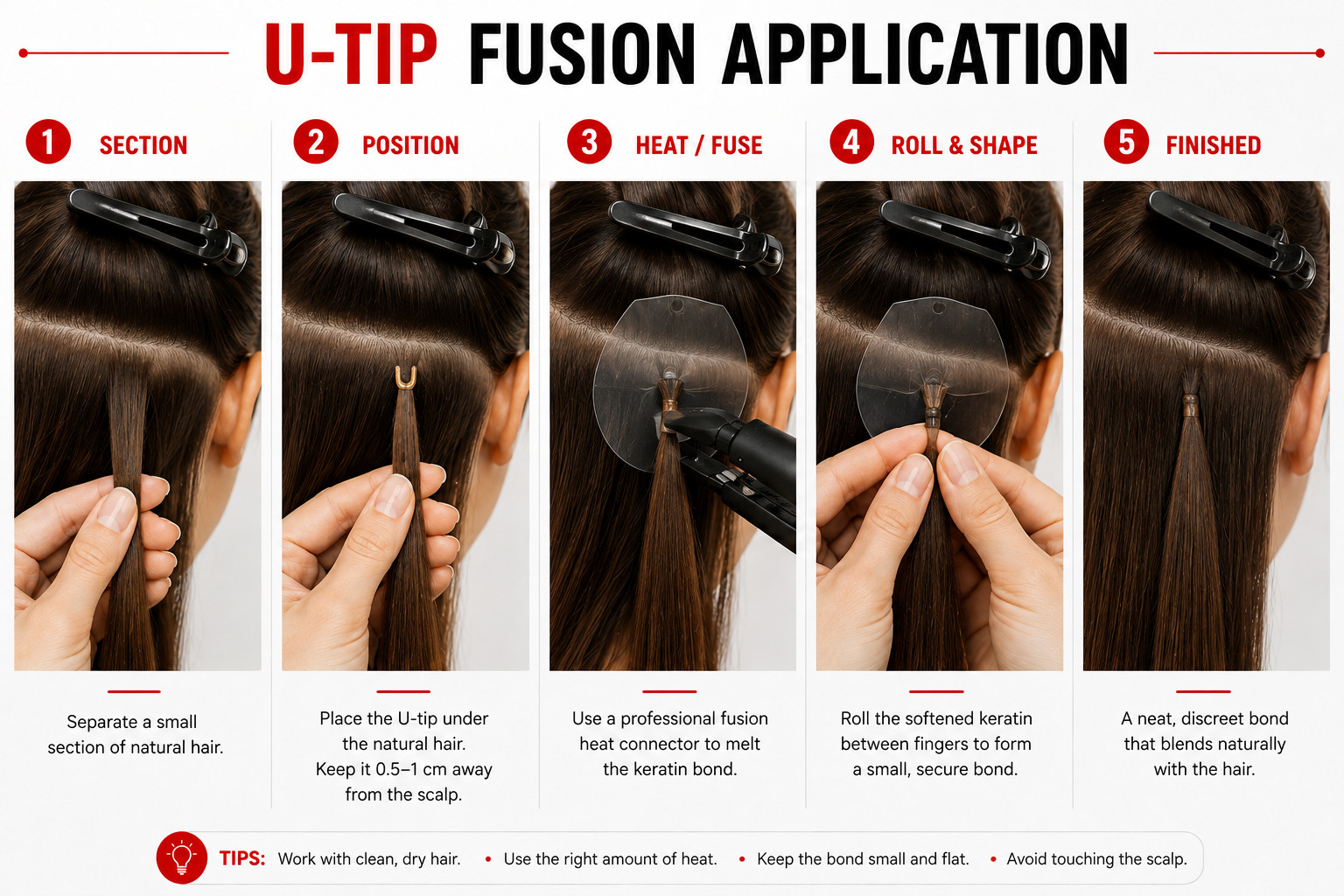
In a general professional application, a stylist isolates a small section of natural hair, positions the U-shaped attachment near the root, and uses the appropriate fusion method to soften the bond. The softened attachment is then formed around the selected natural-hair section.
The exact technique can vary depending on the product system, fusion tool, and professional protocol, so universal temperatures, heating times, or placement measurements should not be assumed.
A typical application can be understood in five stages:
Professional judgment remains important because section size, placement, and application technique can affect both the finished appearance and the way the extension behaves during wear.
Because each U-Tip strand is applied individually, stylists can control where additional hair is distributed rather than following a continuous row or panel.
This can be useful when creating targeted length, volume, or color placement. The final result still depends on factors such as natural hair density, extension placement, strand quantity, and stylist technique.
The attachment is prepared before installation, so the stylist works with a pre-tipped strand rather than creating the bond from loose hair during the service.
This is one of the characteristics that distinguishes U-Tip from other individual-strand extension systems. The finished result depends on both the quality of the extension hair and the consistency of the attachment.
U-Tip bonds are positioned beneath the surrounding natural hair.
How discreet the attachment appears depends on hair density, placement, bond size, hairstyle, and application technique. For this reason, it is more accurate to describe the attachment as compact rather than making universal claims that it is invisible.
U-Tip is one of several strand-by-strand tip extension formats. While these systems may look similar at first, their attachment shapes and common application methods differ. Understanding these differences can help salons, stylists, hair brands, and wholesale buyers identify which format better fits their service needs or product range.
|
|
|
|
|
|
|
|
|
|
|
|
|
|
|
|
|
|
|
|
|
|
|
|
|
|
|
|
|
|
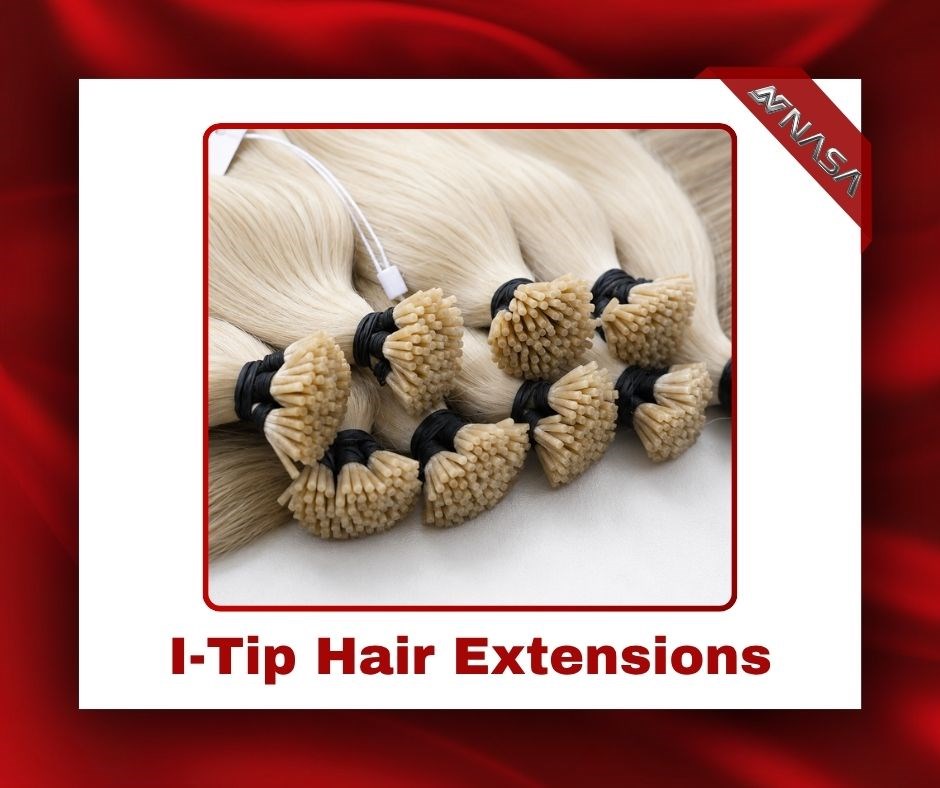
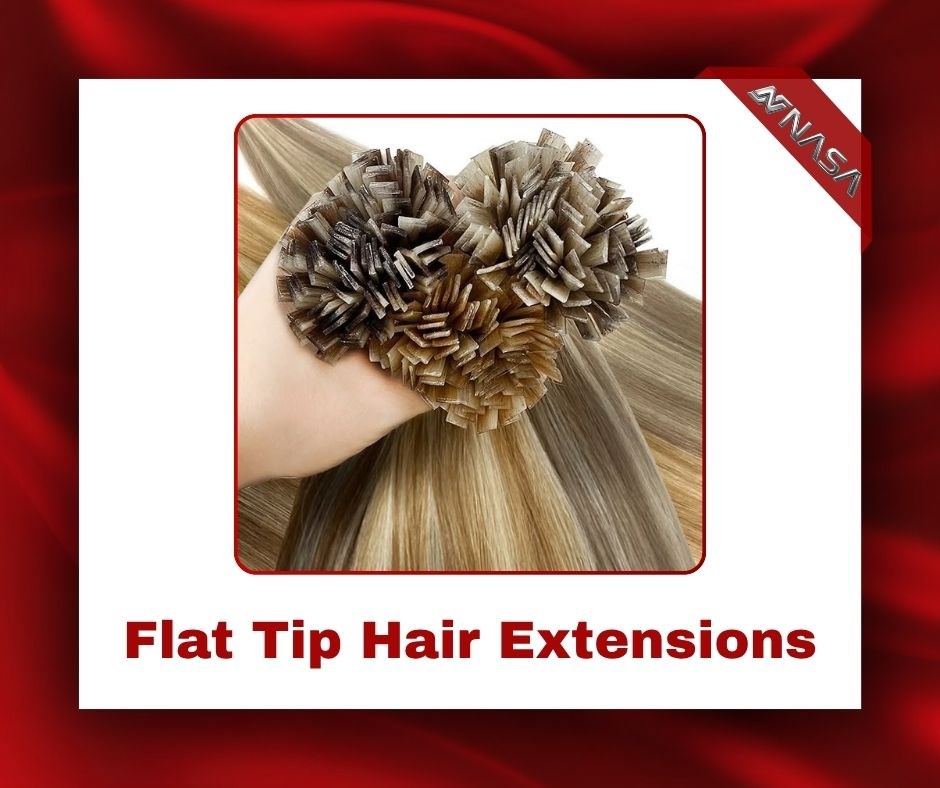
The main difference between these formats lies in the attachment design and how the individual strands are typically applied. U-Tip and V-Tip extensions are commonly associated with fusion methods, while I-Tip extensions are often used with bead or micro-link systems. Flat Tip uses a flatter attachment profile, although its exact construction and application method can vary by product.
These differences do not make one system universally better than another. The appropriate choice depends on the product construction, stylist’s application method, natural hair characteristics, desired result, and salon service approach.
For hair brands and wholesale buyers, attachment type is also an important product-selection factor. Rather than treating all tip extensions as interchangeable, buyers should confirm the construction, specifications, and intended application method of each product before ordering.
Readers who need more detail about a specific format can refer to NASA Hair’s dedicated guides to I-Tip Hair Extensions, Flat Tip Hair Extensions, and other tip extension systems.
U-Tip extensions may suit clients who want strand-by-strand control over added length, volume, or selected color placement.
Suitability should be assessed professionally based on factors such as natural hair condition and density, desired placement, and the stylist’s preferred extension technique. Because U-Tip generally involves a fusion application, the stylist should also determine whether this system is appropriate for the individual client and service goal.
In some cases, another extension method may be more suitable depending on the natural hair, desired result, lifestyle, or salon service approach.
U-Tip extensions should be handled carefully around the attachment points during daily brushing, washing, and styling. Detangle gently and avoid unnecessary pulling on the bonds. Products and styling tools used near the attachments should follow the stylist’s or manufacturer’s recommendations. As natural hair grows, the position of the bonds changes, so professional checks or maintenance may be needed depending on the client’s hair growth and the specific extension system.
For professional buyers, the hair and the U-shaped attachment should be evaluated together rather than treated as separate product details.
Start by assessing the extension hair itself. Check the feel, alignment, texture consistency, and how the hair behaves after washing. At the same time, compare several U-shaped attachments to see whether their shape, finishing, and connection to the hair appear reasonably consistent.
A physical sample gives buyers more useful information than judging the product from smoothness or shine in photographs alone.
Before placing a larger order, confirm the specifications that matter for the business, such as length, color, texture, strand or pack weight, fullness, and attachment details.
Hair brands should also clarify packaging and customization requirements where relevant. These specifications may vary between suppliers and should be confirmed rather than assumed.
Physical samples allow salons, brands, and wholesalers to evaluate both hair performance and attachment finishing before committing to larger quantities.
For repeat purchasing, buyers should also clarify approved specifications and consistency expectations across future batches. A strong initial sample is most useful when the supplier can maintain the agreed product characteristics over subsequent orders.
U-Tip Hair Extensions are individual extension strands with a pre-formed, U-shaped attachment at the top. They are commonly used as part of a professional strand-by-strand fusion extension system.
A stylist typically isolates a small section of natural hair, positions the U-Tip attachment, and uses a professional fusion tool to soften the bond. The attachment is then formed around the natural hair section according to the product system and professional application method.
Conventional U-Tip fusion systems commonly use controlled heat to soften the pre-bonded attachment during installation. Exact application methods can vary between products, so salons should follow the specifications and professional guidance for the system they use.
No. U-Tips generally use a pre-bonded attachment formed during a fusion process, while I-Tips are commonly associated with bead or micro-link attachment. Both are individual strand systems, but their application concepts differ.
The main difference is the attachment profile and the application system associated with each product. U-Tip has a curved U-shaped attachment, Flat Tip uses a flatter attachment profile, and V-Tip has a V-shaped tip. Exact construction and application methods can vary between products and manufacturers.
Reusability depends on the condition of the hair after removal, the product construction, the removal method, and the manufacturer’s recommended reapplication process. Buyers should confirm this specification for the particular U-Tip product they plan to use.
Buyers should evaluate the hair quality, U-shaped attachment consistency, relevant product specifications, physical samples, and consistency expectations for repeat orders. Brands should also clarify available customization and packaging requirements when needed.
U-Tip Hair Extensions are defined by their individual strand format and pre-bonded U-shaped attachment. Their professional performance depends on more than the attachment name alone: hair quality, bond consistency, application technique, client suitability, and maintenance all influence the finished result.
For salons, choosing the right system requires considering both the client and the stylist’s application approach. For hair brands and wholesale buyers, physical sample testing, clear specifications, and repeat-order consistency provide a stronger basis for evaluating U-Tip products before larger purchases.
NASA Hair offers U-Tip and other human hair extension options for salons, hair brands, wholesalers, and distributors. Buyers can contact the NASA Hair team to discuss available product specifications, samples, current customization options, and wholesale requirements before placing an order.
+84347071123

 French
 Russian