Stylists, brand owners, and hair buyers choose among various strand-by-strand extension methods. Beyond hair origin and texture, the shape and construction of the attachment can affect how an extension sits, blends, and is managed after application.
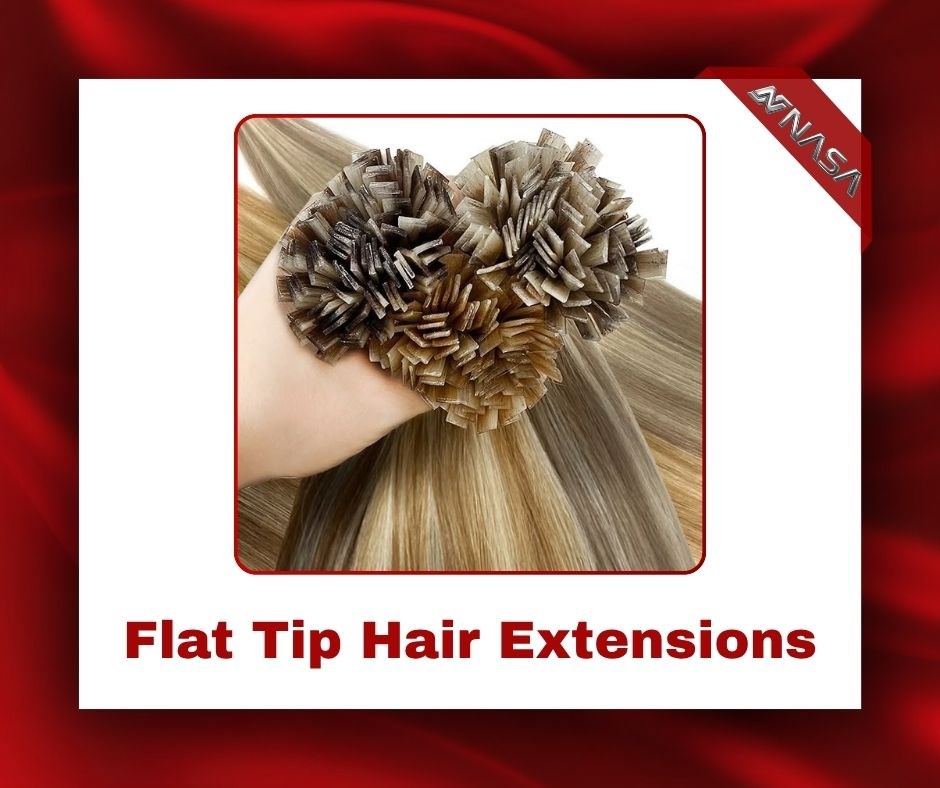
Flat Tip Hair Extensions are one option within the broader category of strand-by-strand extensions. Their defining feature is a flat attachment at the top of each hair strand, designed to sit close to the natural hair when properly applied.
However, choosing an extension method is not simply about the shape of the attachment. Hair quality, natural hair condition, application technique, maintenance requirements, and the intended use of the product all need to be considered.
This guide provides an educational overview of Flat Tip Hair Extensions, including their structure, general application considerations, key characteristics, comparison with other tip designs, maintenance factors, and practical considerations for wholesale buyers.
Flat Tip Hair Extensions are individual strands of human hair pre-tipped with a flat, tab-shaped attachment. They belong to the strand-by-strand extension family and are installed near the root of the natural hair, one strand at a time, by a trained professional.
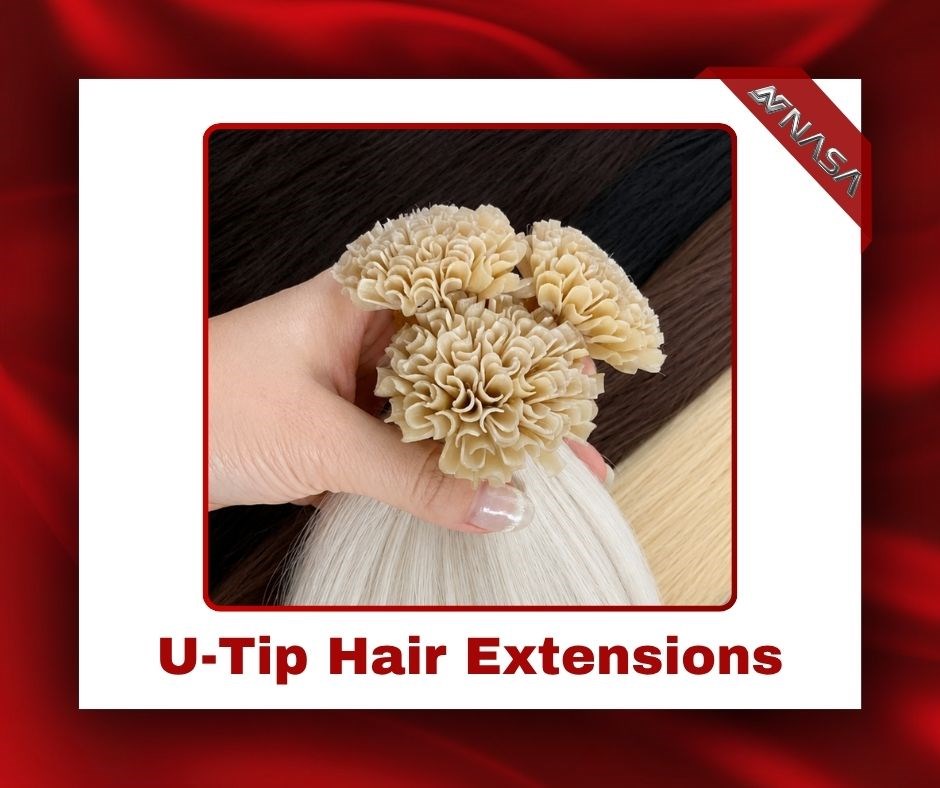
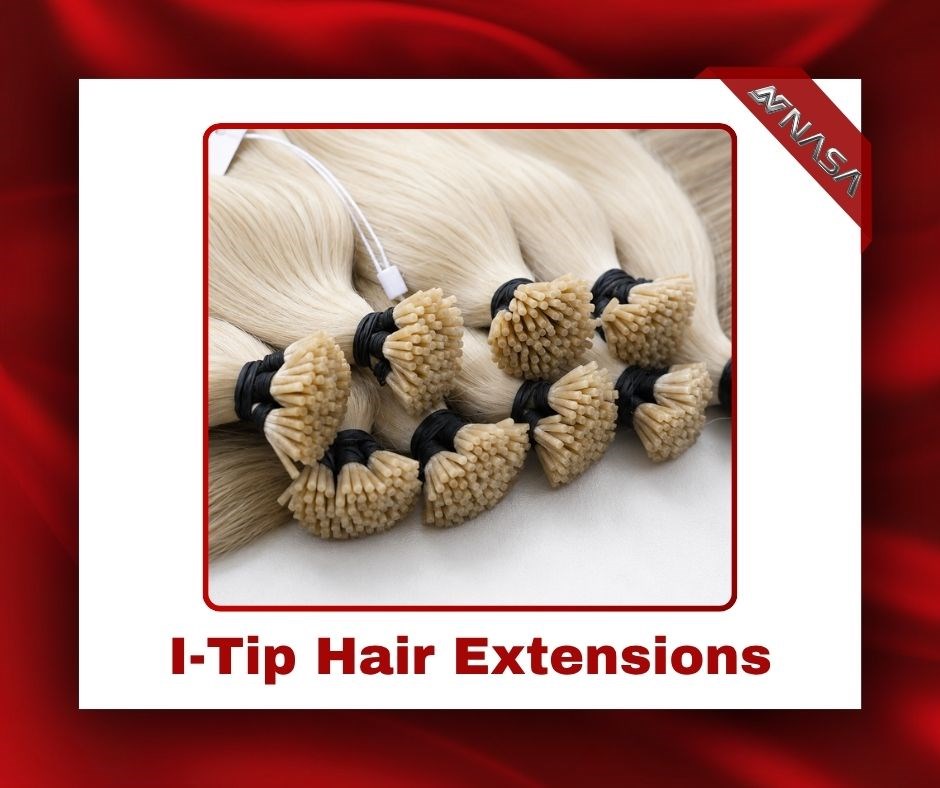
The defining feature is the shape of the attachment itself. Instead of a rounded bond (U-Tip) or a cylindrical stick (I-Tip), the top of each Flat Tip strand is pressed into a flat profile. That geometry lets the bond lie flatter against the head after installation — which is why many stylists reach for this format when a client wants a low-profile, hard-to-detect result.
In commercial hair collections, Flat Tip Hair Extensions are typically offered in a range of lengths (short, mid, and long options), textures (straight, wavy, curly), colors (natural shades and pre-colored options), strand weights (grams per strand), and hair origins with different processing levels. Because these specifications vary between manufacturers, always confirm exact product details with the supplier rather than assuming every "Flat Tip" product is built the same way.
The most noticeable difference is the shape of the attachment: flat instead of round, cylindrical or V-shaped.
That flattened profile is designed to sit closer to the head after installation, be easier to conceal beneath surrounding natural hair, and reduce the "bump" some clients feel from rounder bonds. How discreet the result actually is still depends on the client's hair density, the stylist's placement, the strand weight chosen, and the finished hairstyle — not on the shape of the tip alone.
Flat Tip extensions work by attaching one pre-tipped strand at a time to a small, sectioned portion of the client's own hair, close to the root.
Because each strand is applied individually, the stylist controls where extensions are placed (front, sides, crown, nape), how much volume is added in each zone, and how length is layered into the client's existing style.
Correct sectioning, appropriate strand weight, and clean placement are all critical for a natural blend and healthy wear. The exact installation method — the tool, heat setting or bonding technique — depends on the specific Flat Tip product, so stylists should follow the manufacturer's instructions for the collection they are using.
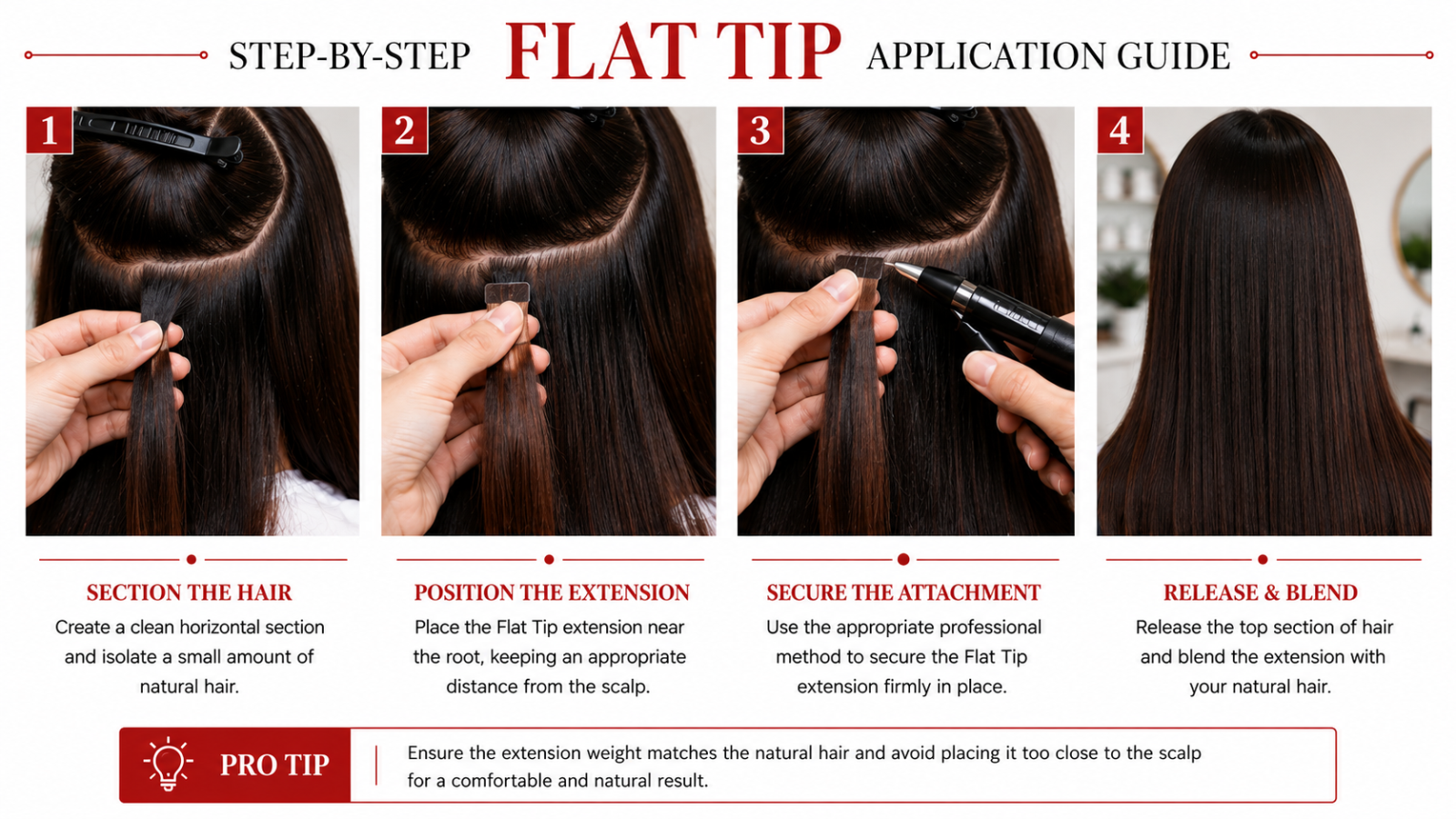
Understanding what Flat Tip extensions actually offer in the chair helps salons decide when the format fits — and when another system is a better call.
The flat shape is engineered to sit close to the head. When correctly applied and covered by surrounding hair, the bond can be very discreet. Visibility ultimately depends on hair density, placement, technique and hairstyle.
Unlike wefts, which deliver a continuous row of hair, Flat Tip extensions are placed strand by strand. That gives stylists precise control over where volume and length land.
Because strands can be distributed throughout the head, clients often gain more freedom to wear updos, ponytails and partings without exposing a horizontal weft line. Whether the hair itself can be heat-styled, colored or chemically processed depends on its quality and composition — always confirm this on the product spec sheet before assuming.
Some Flat Tip products can be removed and reinstalled; others are single-use. This depends on the tip material, the hair's post-removal condition, and the manufacturer's recommended workflow. For wholesale buyers, this is a specification to confirm directly — not to assume.
Tip extension collections can include different attachment designs, such as Flat Tip, U-Tip, I-Tip, V-Tip, and Micro-Tip.
The exact construction and application method can vary between manufacturers, so buyers should use product specifications from the supplier when comparing specific products.
|
|
|
|
|
|
|
|
|
|
|
|
|
|
|
|
|
|
|
|
|
|
|
|
|
|
|
|
Important: The exact application method, dimensions, materials, and performance characteristics can differ by manufacturer. The comparison above describes general product formats rather than universal specifications.
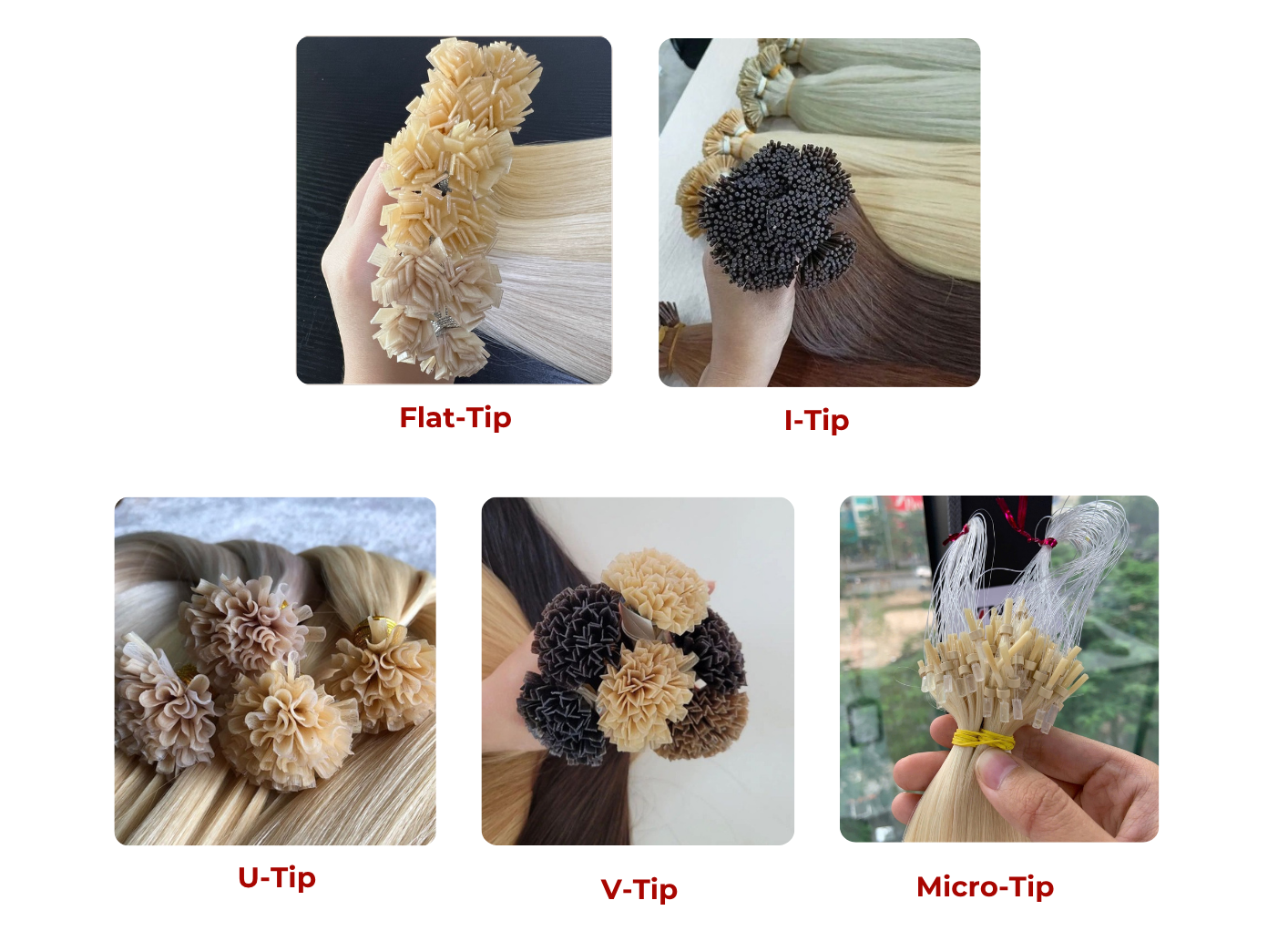
Different extension systems suit different clients. Flat Tip is a strong option, not a universal one.
Flat Tip extensions add length and volume through individual placement, so stylists can build density exactly where the client needs it — thin ends, sparse crown, short layers.
Clients who dislike the feeling of a rounded bond, or who wear high ponytails and partings, often prefer the flatter attachment profile. Visibility of the bond still depends on the client's natural hair density, placement, installation technique, and hairstyle.
For fine, weak, or chemically compromised hair, a professional must assess density and integrity before selecting any bonded extension. The right choice depends on the natural hair — not just the attachment shape.
Tape-ins offer faster installation for clients seeking a quicker service. Wefts (hand-tied or machine) provide broader horizontal coverage for full-head volume. I-Tip with micro-rings is often preferred by clients who avoid heat and bonding agents. The best choice depends on the client's requirements and the stylist's preferred installation method
There is an important difference between the lifespan of the hair itself and the maintenance cycle of an installed extension.
Rather than promising a fixed number of months, buyers and stylists should evaluate the following factors:
For B2B buyers, sourcing Flat Tip Hair Extensions is not just a price comparison. Use this checklist before committing to a bulk order.
Assess overall condition, texture, consistency and processing. If the supplier claims a specific origin (e.g. Vietnamese, Southeast Asian), verify with documentation and physical samples.
Check that tips have a uniform shape, thickness and finish across the batch, and that each attachment is securely bonded to the hair. Compare multiple pieces from the same order.
Confirm available lengths, colors, textures, strand weights and tail density against the specs your target market expects.
For brands and distributors, ask about custom hair specifications, colors, textures, packaging and private-label options.
Before placing a bulk order, test physical samples for shedding, tangling, color consistency, tip quality and finishing. Samples reveal what a spec sheet cannot
What are Flat Tip Hair Extensions?
Flat Tip Hair Extensions are individual human hair strands pre-tipped with a flat, tab-shaped attachment designed to sit close to the scalp when installed by a trained stylist.
Are Flat Tip Hair Extensions made from 100% human hair?
They can be, but hair composition varies by supplier. Always confirm hair origin and composition on the product spec sheet before purchasing.
Are Flat Tip Extensions suitable for fine hair?
They can be considered, but suitability depends on the client's natural hair density, condition, extension weight and application method. A professional stylist should assess these factors before installation.
Can Flat Tip Hair Extensions be reused?
Reusability depends on the product's construction, the hair's condition after removal, and the manufacturer's recommended reapplication process. Confirm this with your supplier.
How do Flat Tip Extensions compare with U-Tip and I-Tip Extensions?
Flat Tips have a flattened attachment profile. U-Tips generally use a U- or nail-shaped keratin bond. I-Tips use a cylindrical stick-shaped tip, often installed with micro-beads or rings. Exact designs vary between manufacturers.
How long do Flat Tip Hair Extensions last?
Rather than a fixed number of months, longevity depends on hair quality, tip construction, application technique and home care. The maintenance cycle is also driven by the client's natural hair growth.
Do Flat Tip Extensions damage natural hair?
When installed and removed correctly by a trained stylist on suitable natural hair, bonded extensions are considered a professional option. Damage risk rises with poor installation, inappropriate strand weight, or aggressive home care.
What should wholesale buyers evaluate before placing bulk orders?
Hair quality, tip construction, batch consistency, available specifications, sample performance, customization options and supplier reliability
Flat Tip Hair Extensions are one option within the wider range of strand-by-strand extension systems. Their defining characteristic is the flat attachment profile, while the overall result depends on factors such as hair quality, product construction, professional application, natural hair condition, and maintenance.
For salons and professional stylists, understanding these factors can help determine whether Flat Tip extensions are appropriate for a particular client. For brands and wholesale buyers, evaluating physical samples and supplier specifications provides a more reliable basis for purchasing decisions.
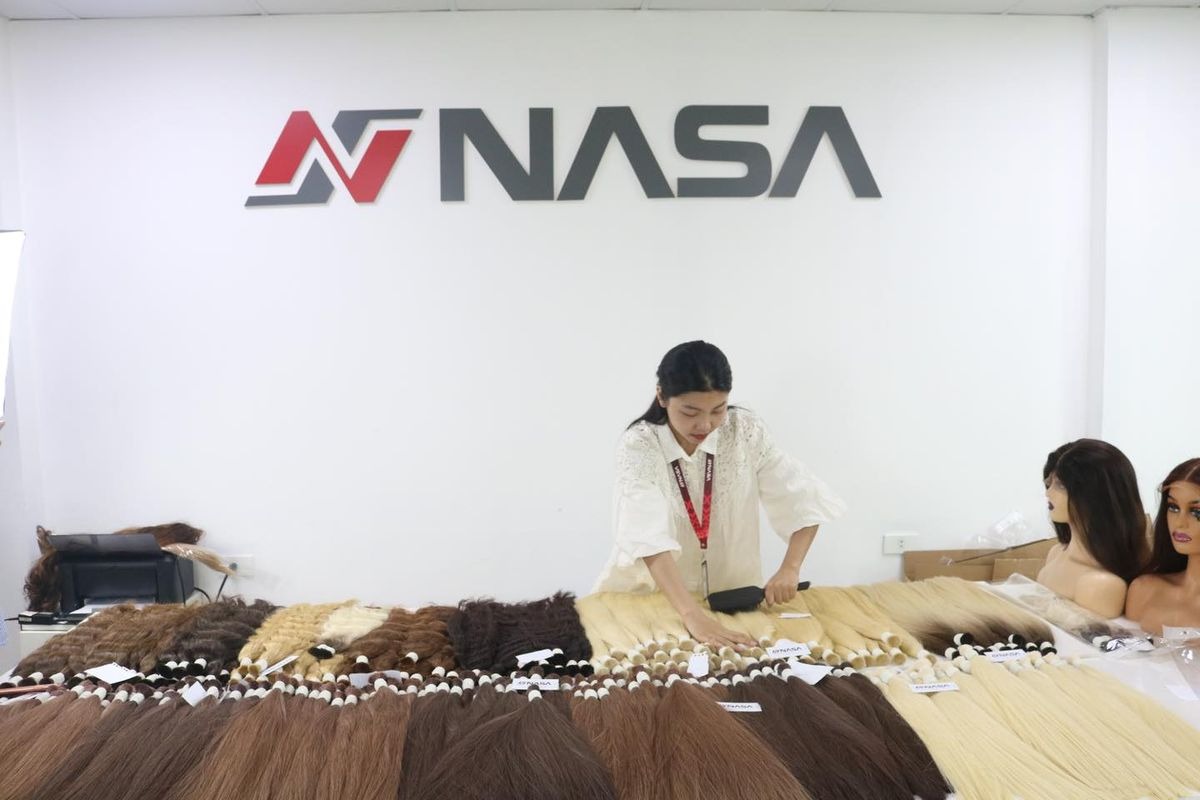
As a manufacturer specializing in 100% authentic Vietnamese human hair extensions, NASA Hair works with salons, hair brands, wholesalers, and distributors looking for consistent products and flexible sourcing solutions.
+84347071123

 French
 Russian