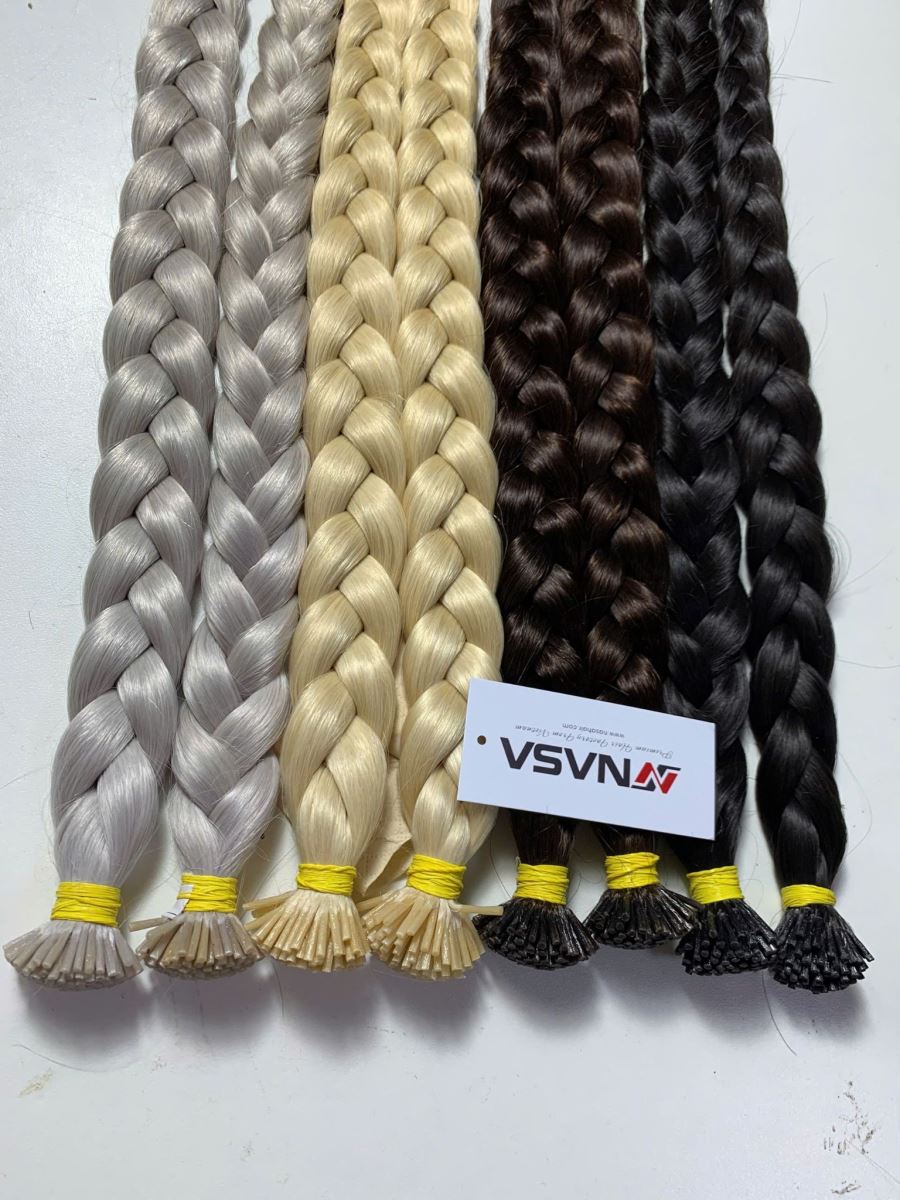
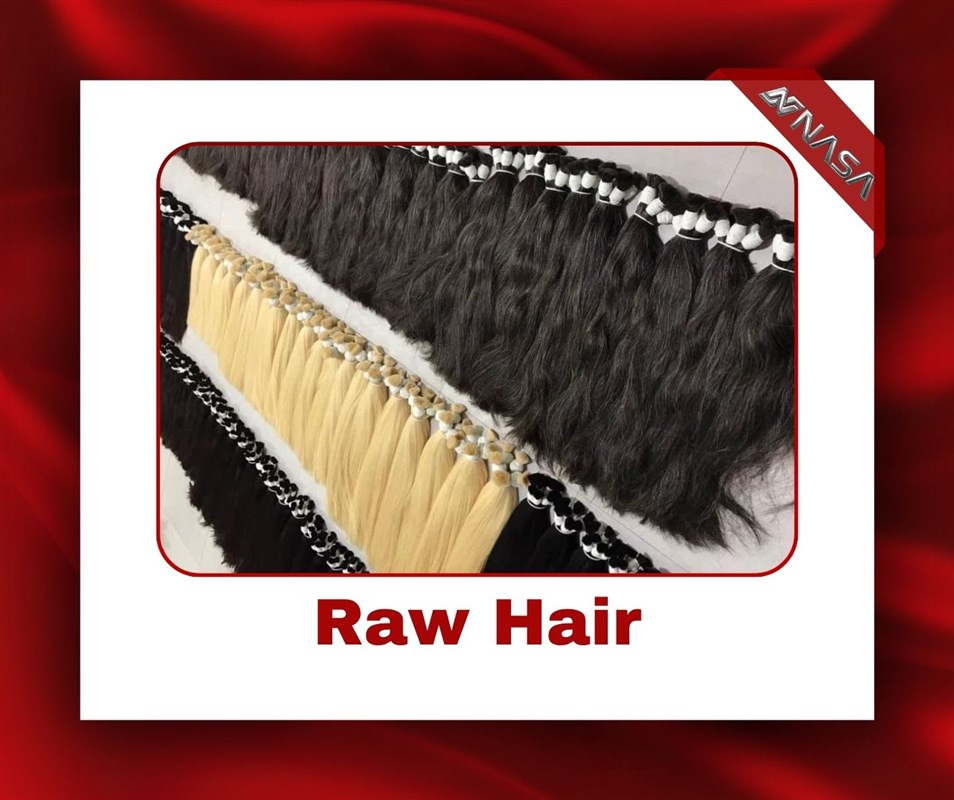
I-tip Hair Extensions are a strand-by-strand extension format designed around a narrow attachment at the top of each extension strand. Instead of adding hair through a continuous weft or tape panel, stylists can position individual strands according to the client’s desired length, volume, and overall style.
For salons, hair brands, and wholesale buyers, however, the name “I-Tip” only explains part of the product. Hair quality, attachment construction, application technique, product consistency, and suitability for the target market can all affect how an I-Tip product performs in professional use.
This guide explains how I-Tip extensions are structured, how they are commonly applied, what professionals should consider during use and care, and what brands and wholesale buyers should evaluate before placing larger orders.
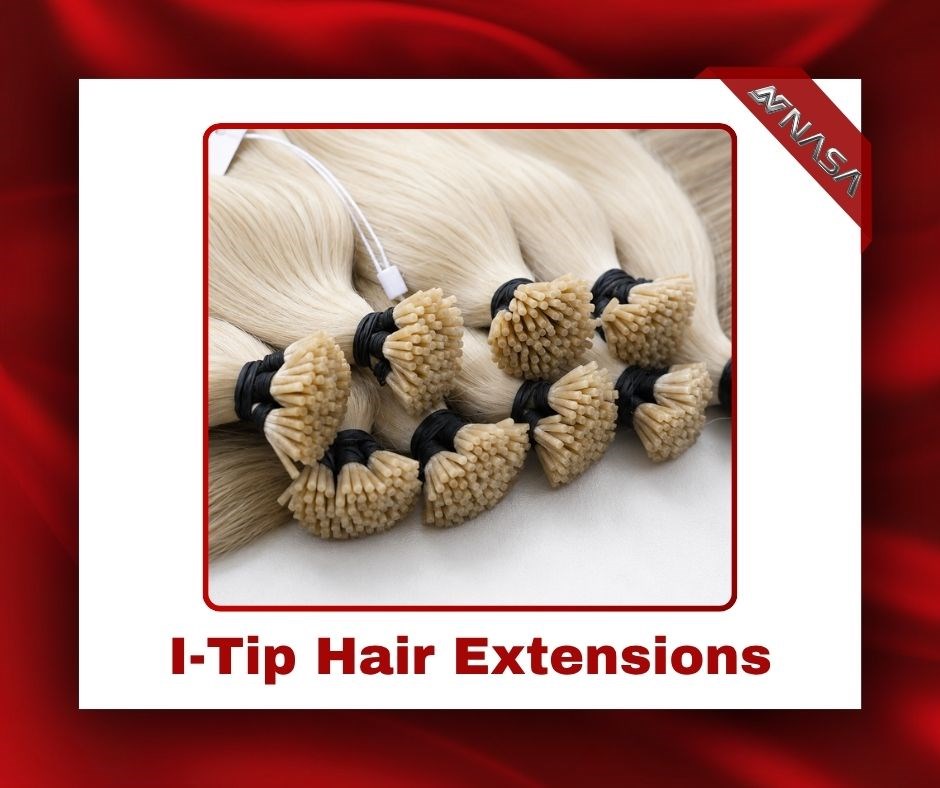
An I-tip Hair Extension is an individual extension strand with a narrow, elongated attachment at the top. The shape resembles the letter “I,” which is where the product gets its name.
Unlike weft or tape-in systems, I-Tips are installed strand by strand. This gives stylists greater control over where additional hair is placed and how the extensions are distributed throughout the client’s natural hair.
NASA Hair includes I-Tip among its keratin/tip extension product range. Exact attachment materials, dimensions, strand weights, and other specifications can vary by product and manufacturer, so professional buyers should confirm these details before ordering.
The attachment is the defining structural feature of an I-Tip extension.
For professional use, consistency matters. When evaluating a sample, salons and buyers can look at whether the tips have a similar shape, even finishing, and consistent connection between the attachment and the hair.
The appropriate tip size and attachment system can also depend on the installation method used by the salon. This is why buyers should confirm compatibility rather than assuming that every I-Tip product follows exactly the same specification.
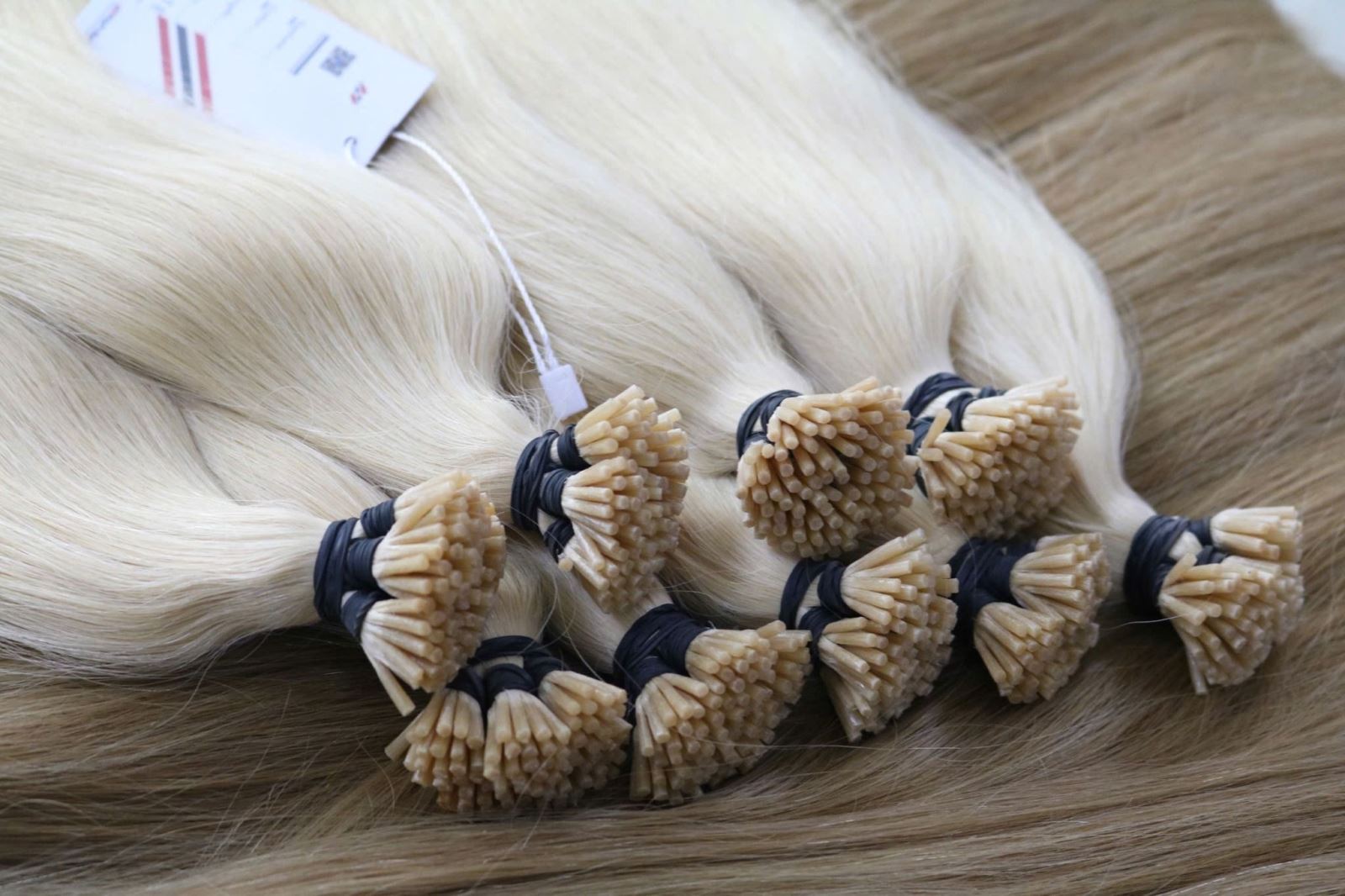
I-Tip Hair Extensions are commonly associated with bead or micro-link installation.
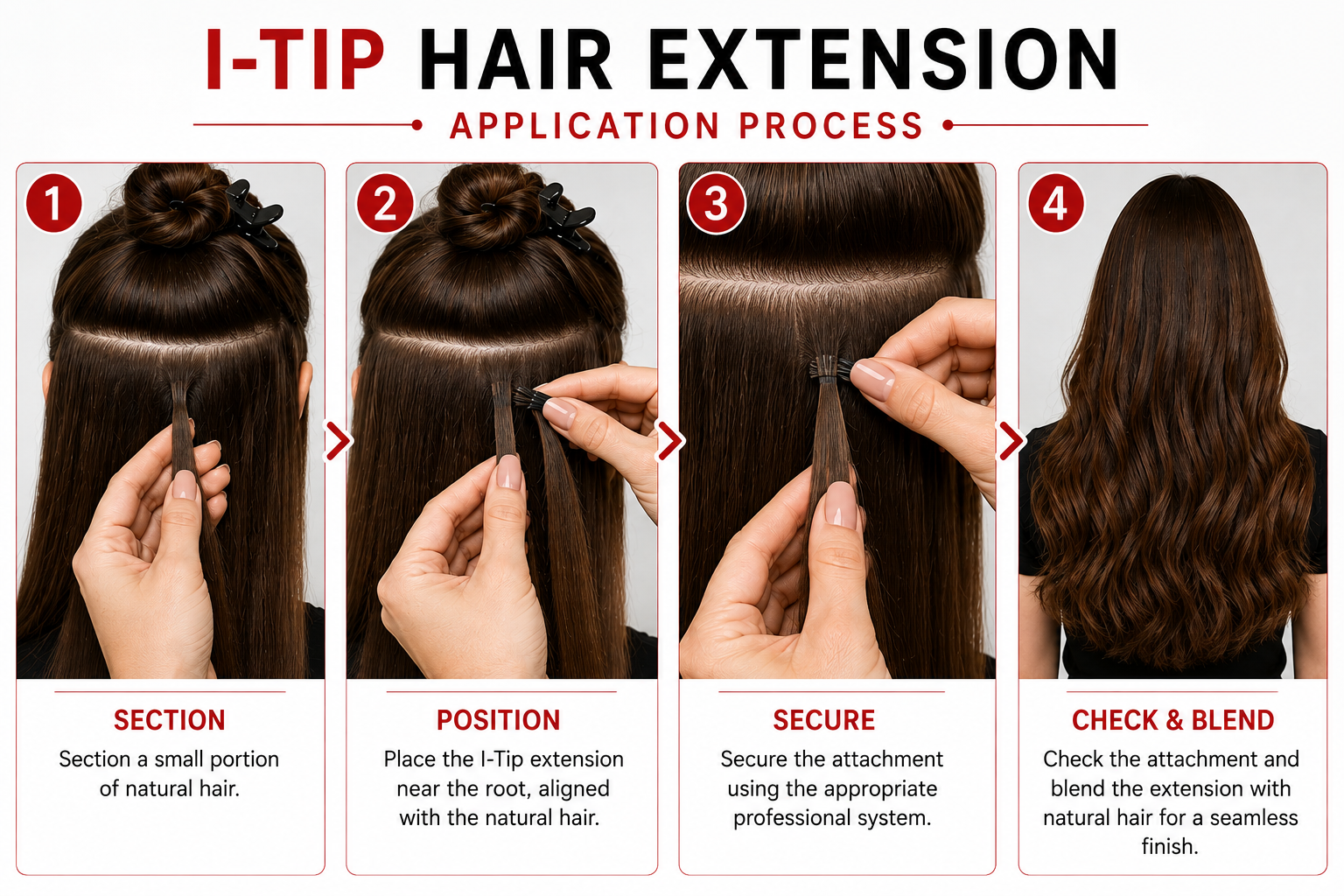
In a typical strand-by-strand application, the stylist separates a small section of the client’s natural hair, positions the extension near the root, and secures the natural hair and extension using the attachment system intended for that product.
The exact application method can vary depending on the I-Tip construction and attachment system, so salons should follow the specifications and professional application guidance for the particular product they use.
A general salon application can be understood in four stages:
Correct sectioning and appropriate tension are important because the finished result depends not only on the extension itself, but also on how it is applied.
Because I-Tips are applied individually, stylists can distribute extensions in selected areas rather than following a continuous track.
This can be useful for targeted length, volume, or color placement. The final appearance still depends on the client’s natural hair density, the number and position of extension strands, and the stylist’s technique.
The I-Tip attachment is relatively narrow compared with broad tape panels or weft tracks.
When placed correctly beneath sufficient natural hair, the attachment may be discreet. However, visibility depends on factors such as natural hair density, attachment size, placement, and hairstyle.
It is more accurate to describe I-Tips as having a compact attachment than to call them “invisible.”
As natural hair grows, attachment points gradually move farther from the scalp.
Depending on the product and installation system, professional adjustment, removal, or reapplication may eventually be needed. There is no single maintenance interval that applies to every client or every I-Tip product.
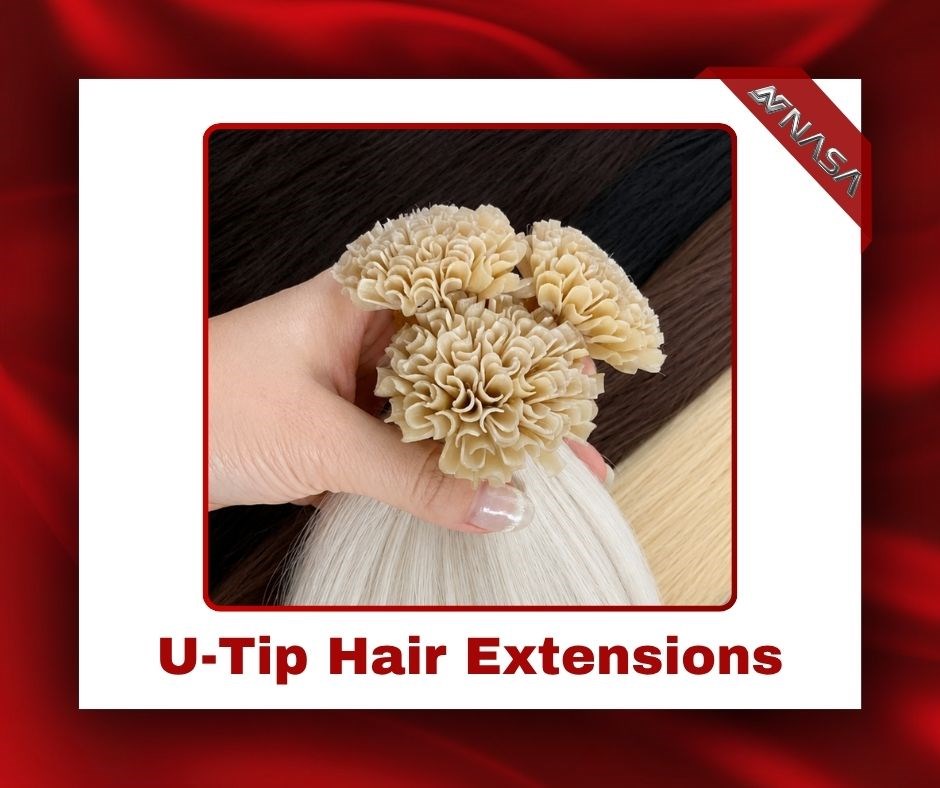
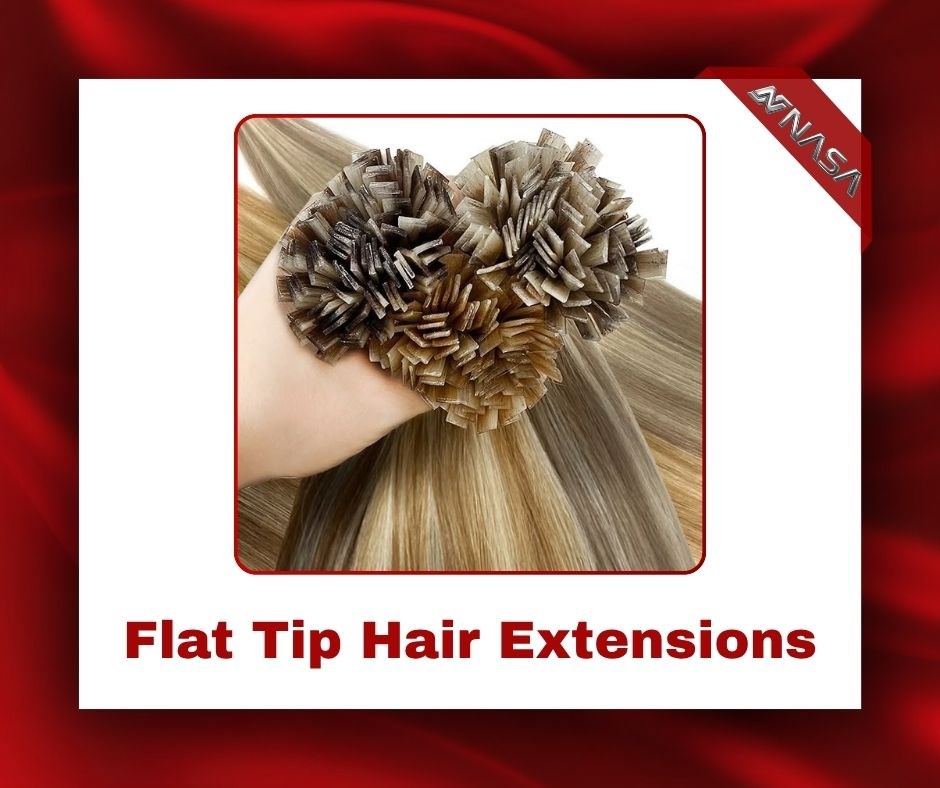
I-Tip, Flat Tip, and U-Tip extensions all belong to the broader family of individual strand extension systems, but their attachment profiles differ.
|
|
|
|
|
|
|
|
|
|
|
|
|
|
|
|
|
|
|
|
|
|
|
|
|
Exact materials and application methods can vary by manufacturer. Buyers and stylists should therefore confirm the specifications of the product they intend to use rather than relying only on the product name.
Readers who need more detail about another attachment type can refer to NASA Hair’s dedicated Flat Tip Hair Extensions guide rather than treating the comparison above as a complete explanation of Flat Tip or U-Tip systems.
I-tip Hair Extensions can be useful when a stylist wants individual control over extension placement.
They may be considered for clients seeking additional length, volume, or selected placement in particular areas of the hair.
Clients who prefer a bead-based strand-by-strand system may also consider I-Tips, depending on the product construction and the stylist’s preferred application technique.
Natural hair density should be evaluated carefully. With finer or sparse hair, the attachments may be more difficult to conceal, and the stylist should consider natural hair strength, attachment size, extension weight, and desired hairstyle before installation.
Another system may be more appropriate in some cases. Tape-ins provide broader panel-based coverage, while weft extensions add hair in rows. The best option depends on the client’s natural hair, service goals, lifestyle, and stylist expertise.
Proper care helps keep I-Tip extensions manageable while reducing unnecessary pulling around the attachment area. Brush gently from the ends upward, handle the attachment points carefully during washing and styling, and follow the stylist or manufacturer’s guidance when applying conditioners, oils, or heat near the attachments. As natural hair grows, the attachment points gradually move farther from the scalp, so professional checks and adjustments may be needed depending on the client’s hair growth, the attachment system, and the salon’s maintenance protocol.
For professional and B2B buyers, I-Tip extensions should be evaluated as a complete product. Hair quality matters, but so do the attachment consistency, product specifications, and performance of the actual sample.
Start with the hair itself. Check its softness, texture consistency, strand alignment, and how it behaves after washing. Shedding and tangling should also be observed rather than judging quality from smoothness or shine alone.
The I-Tip attachment should also be inspected closely. Compare several strands to see whether the tips are evenly finished, similar in shape, and securely connected to the hair. For salons and brands purchasing repeatedly, consistency between strands and batches is especially important.
Before ordering in quantity, confirm the specifications that matter for your business, such as length, color, texture, strand or pack weight, tail fullness, and attachment details. Brands should also clarify packaging and customization requirements when relevant, as these specifications can vary between suppliers.
Physical samples provide information that photos cannot. Buyers can wash and handle the hair to observe its texture, shedding, tangling, color consistency, attachment construction, and overall finishing. This is particularly useful for brands and wholesalers that need to determine whether a product fits the quality expectations of their target market.
For repeat wholesale orders, one good sample is not enough if later batches vary significantly.
Salons, brands, and wholesale buyers should discuss approved specifications, repeat-order expectations, customization requirements, and quality-control procedures before building long-term inventory around a particular product.
A few sourcing mistakes can make comparison between suppliers less reliable.
Comparing only unit price: A lower price does not necessarily mean better value. Buyers should compare equivalent hair quality, attachment construction, specifications, and sample performance.
Inspecting the hair but ignoring the attachment: For I-Tips, attachment consistency is part of the product evaluation.
Ordering without physical samples: Photos can show color and general appearance, but they reveal less about after-wash behavior, attachment consistency, or actual hair feel.
Assuming every supplier uses the same specifications: Strand weight, attachment design, available colors, lengths, textures, and packaging can vary.
Ignoring the target market: Salons, brands, and wholesalers should consider how the product will actually be installed, positioned, and sold in their intended market.
I-tip Hair Extensions are individual extension strands with a narrow, stick-like attachment at the top. They are installed strand by strand rather than as a continuous tape panel or weft.
Many I-Tip systems use bead or micro-link attachment. A stylist isolates a small section of natural hair, positions the extension, and secures the attachment using the professional method intended for that system.
Many bead-based I-Tip systems are applied without a traditional hot-fusion process or liquid adhesive. However, exact construction and application methods can vary, so salons should confirm the specific product instructions.
Reusability depends on the condition of the hair after removal, the attachment construction, and the manufacturer’s recommended reapplication process. Buyers should confirm this specification for the particular I-Tip product they plan to use.
They may be suitable for some clients, but natural hair density, strand strength, attachment visibility, extension weight, and stylist assessment should all be considered before installation.
Buyers should evaluate hair quality, attachment consistency, product specifications, sample performance, available customization, and consistency expectations for repeat orders.
I-tip Hair Extensions are defined by their individual strand format and narrow attachment profile, but successful professional use depends on more than the product name. Hair quality, attachment consistency, application technique, natural hair condition, and maintenance all influence the final result.
For salons, the right extension system should match both the client’s needs and the stylist’s preferred application method. For hair brands and wholesale buyers, physical sample testing, clear product specifications, and consistency expectations provide a stronger basis for evaluating suppliers and planning repeat orders.
NASA Hair offers I-Tip and other human hair extension options for salons, hair brands, wholesalers, and distributors. Buyers can contact the NASA Hair team to discuss available lengths, colors, textures, samples, and current customization requirements before placing a wholesale order.
+84347071123

 French
 Russian