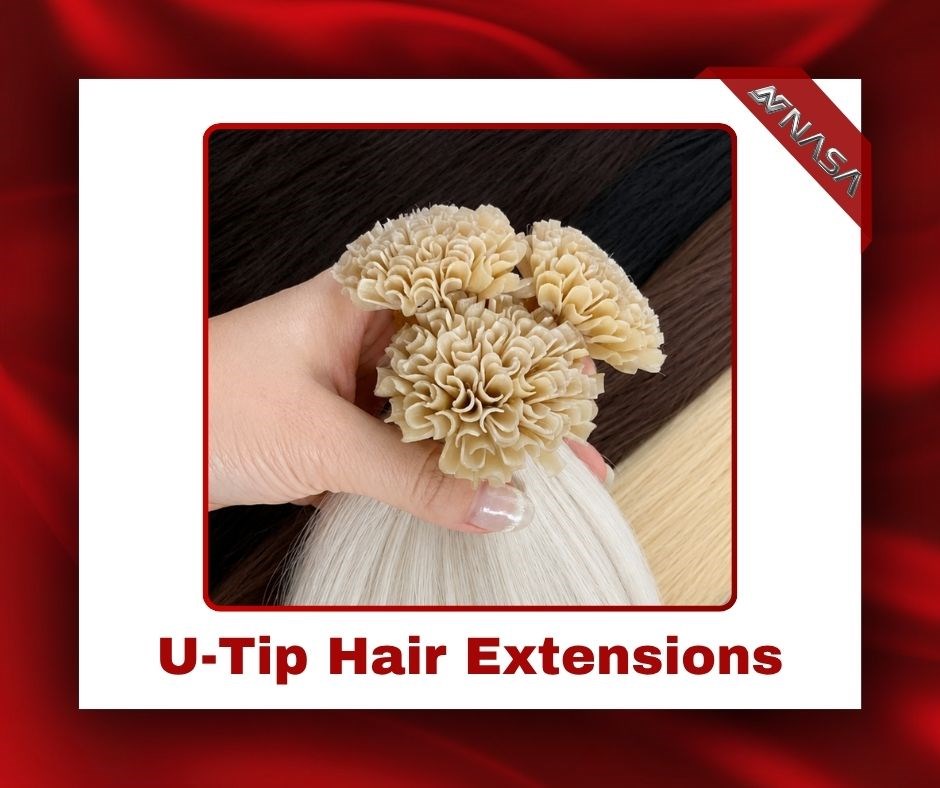
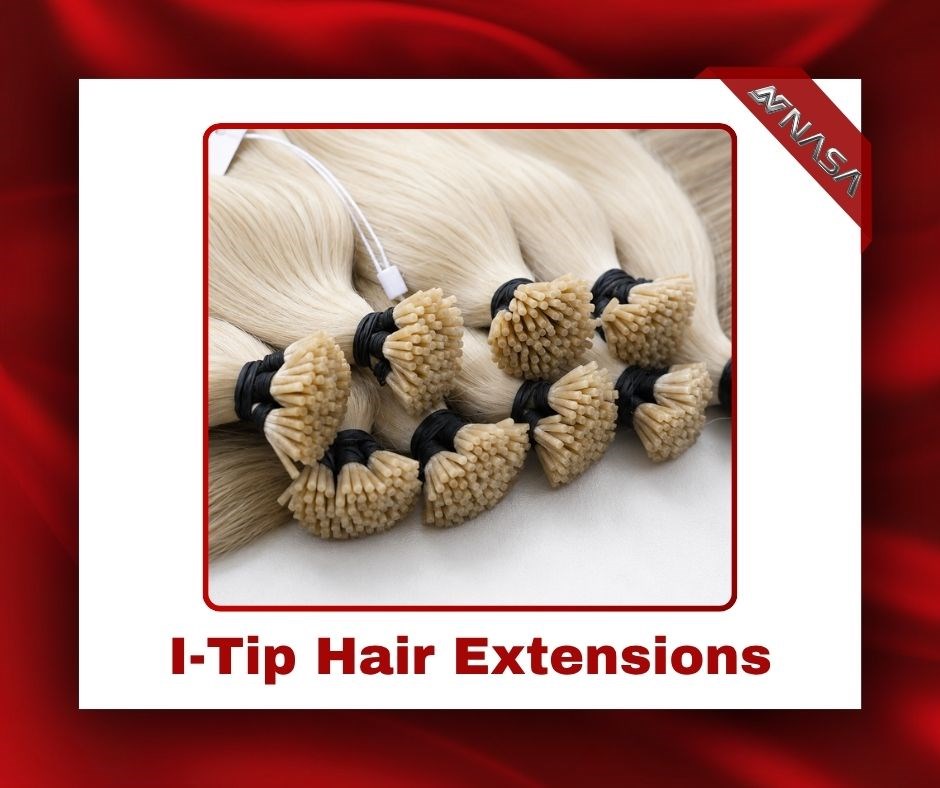
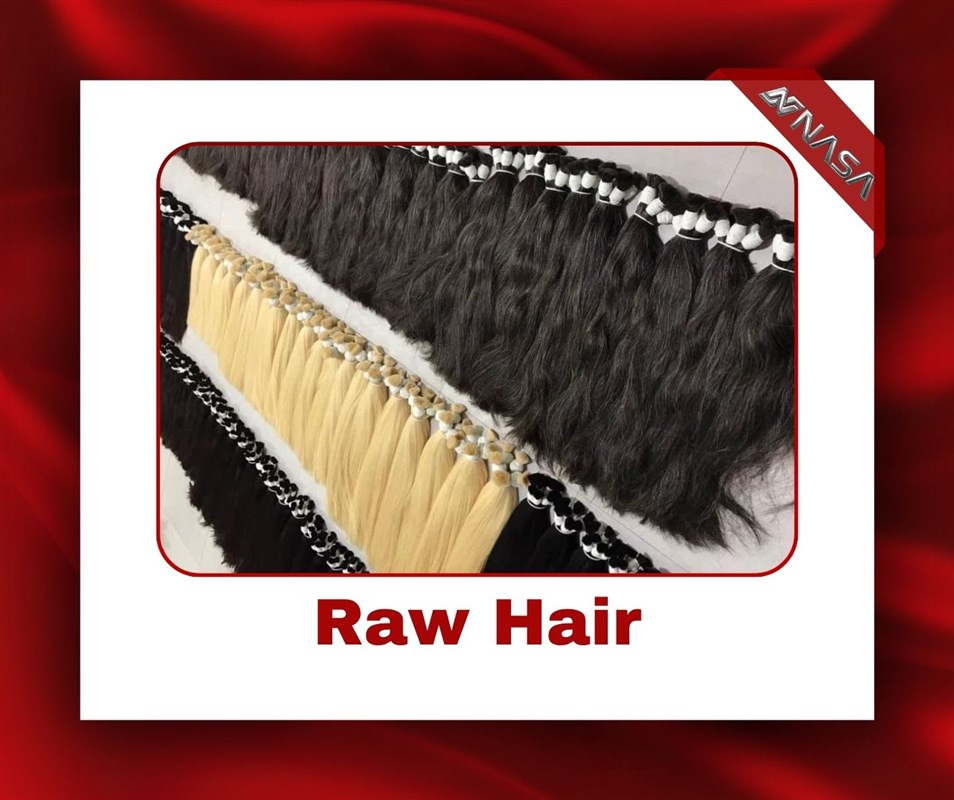
For international buyers, salon owners, and global distributors, sourcing hair extensions vietnam represents a strategic pathway to acquiring premium, unprocessed human hair. In a practical B2B buying context, a direct hair extensions vietnam factory operates as a centralized manufacturing facility where raw, single-donor ponytails are ethically collected, manually sorted, and mechanically configured into specialized extension systems. This direct production ecosystem allows a dedicated hair extensions vietnam supplier to bypass domestic brokers, offering wholesale buyers enhanced supply chain control and distinct cost advantages.
The worldwide reputation of a hair extensions vietnam wholesale channel stems from the unique biological profile of indigenous Vietnamese hair. Sourced from voluntary donors who maintain natural, chemical-free hair care routines, the raw strands possess a thick cortical diameter and exceptionally strong keratin bonds. This high-grade material allows a human hair manufacturer Vietnam to produce extensions that naturally resist environmental weathering, heat styling, and professional chemical alterations while retaining their structural vitality over multiple salon maintenance cycles.
Navigating the international marketplace for hair extensions presents significant challenges, as many suppliers use identical marketing buzzwords to describe vastly different product grades. For an expanding hair business, relying solely on digital photos, edited videos, or aggressive price quotes often leads to purchasing structurally compromised stock. Low-tier factories frequently mask thin, non-Remy comb hair by stripping inverted cuticles in acid baths and glazing the damaged fibers with temporary industrial silicone to simulate a healthy initial luster.
Once the end-consumer installs these units and subjects them to standard washing and styling, the external silicone glaze quickly dissolves. The exposed, highly porous cortex layers rough up, causing severe matting, tracking failure, and heavy shedding. For premium brands, these structural failures result in immediate client churn, unexpected replacement costs, and permanent damage to salon credibility. To secure true product consistency, B2B buyers must move past superficial claims and adopt objective, factory-floor evaluation protocols to verify supplier trust.
Securing human hair quality requires a transparent understanding of processing methodologies and strict in-line quality enforcement. A professional factory maintains absolute control over raw materials by utilizing specialized multi-tiered sorting gates before any automated manufacturing occurs.
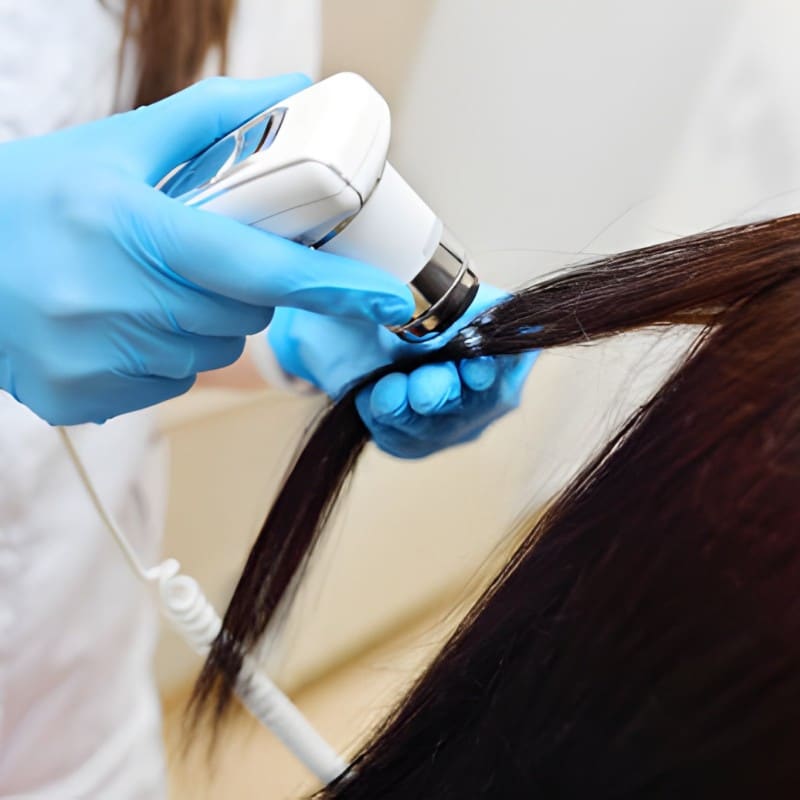
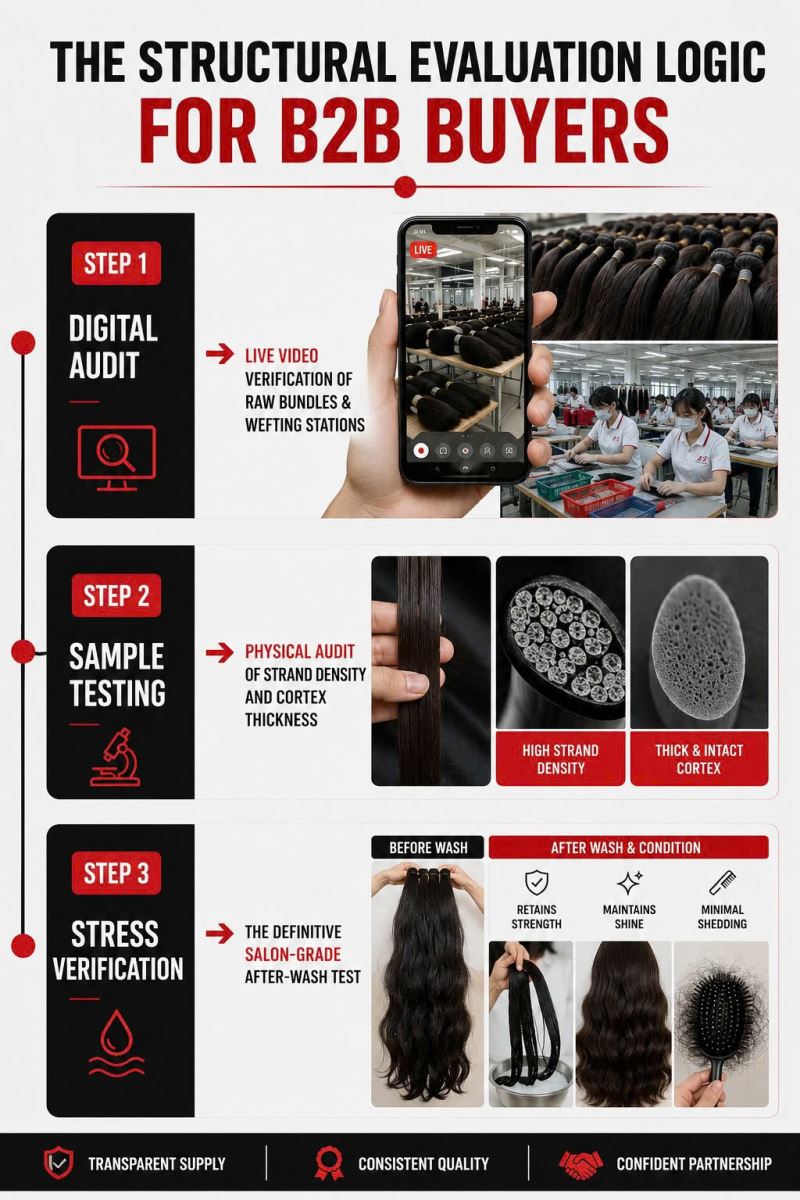
The absolute gold standard for measuring material resilience is the professional after-wash test. During this technical check, sample hair extensions are washed repeatedly using an aggressive clarifying shampoo devoid of conditioning softeners. This process completely strips away any temporary topical agents, leaving the raw cuticle scales fully exposed for inspection. If the strands maintain their original elasticity, natural direction, and uniform softness post-wash, it confirms that the factory preserves the natural lipid structures of the hair shaft, guaranteeing a lifespan that easily spans two to three years of active wear.
The most prevalent mistake wholesale buyers make is evaluating hair purely on its immediate tactile feel or upfront purchase price. This lack of differentiation often leads to critical inventory errors:
To streamline the procurement process, hair business owners can reference this 3-column evaluation framework when auditing prospective manufacturing partners in Vietnam.
|
|
|
|
|
|
|
|
|
|
|
|
|
|
|
|
|
|
|
|
|
|
|
|
Before allocating significant corporate capital to a new manufacturer, buyers must execute a standardized buyer checklist to minimize transaction risks.
.jpg)
vietnamese human hair bundles quality test buyer checklist
First, initiate a small, multi-texture sample order to independently verify the factory's grading standards and processing tolerances. Request an unedited, live video consultation directly from the production lines to confirm the supplier operates physical machinery and a dedicated quality control team rather than acting as a simple residential trading broker.
During your technical evaluation, ask the manufacturer specific questions regarding their sourcing regions, hair grading definitions, and quality verification standards. A reliable, factory-direct supplier will readily share transparent documentation, clear real-time video proof, and explicit after-sales policies outlining their return and exchange protocols for any verified production discrepancies.
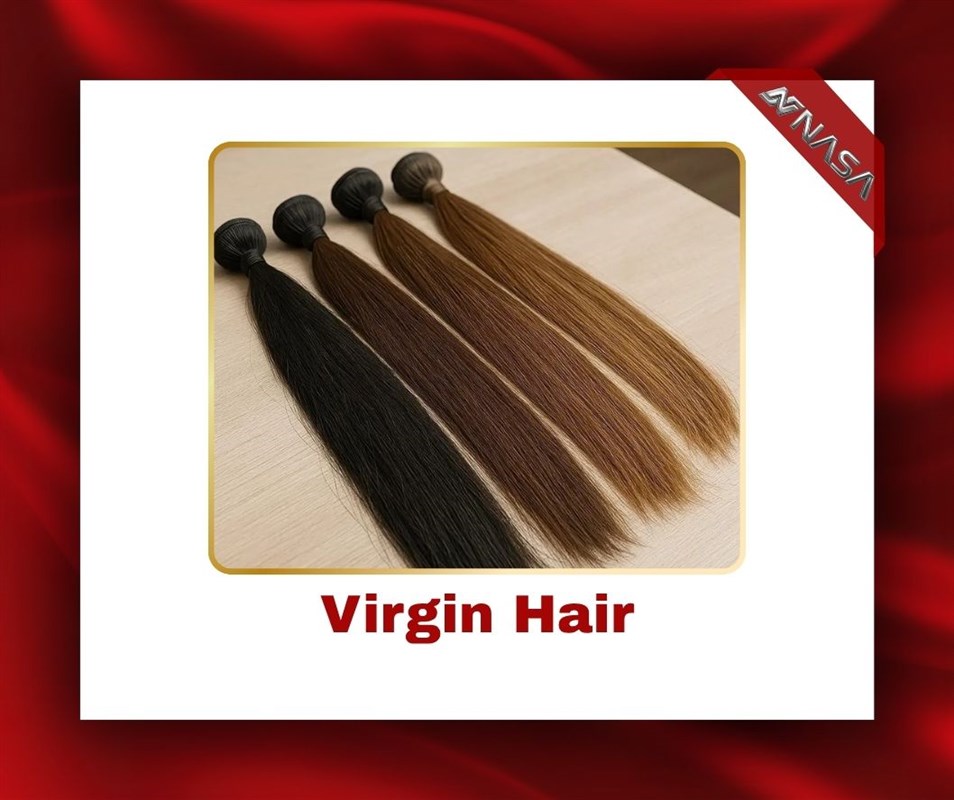
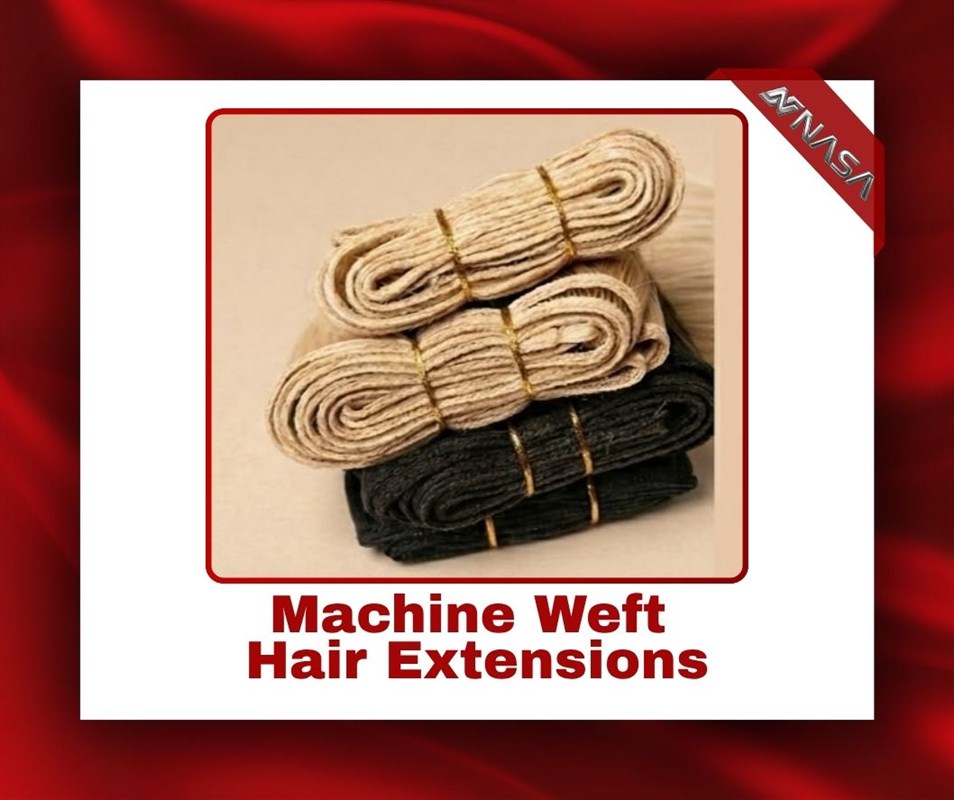
Genuine manufacturing refers to direct production facilities located within Vietnam that specialize in sourcing raw, single-donor human hair and structurally processing it into professional extension systems like tape-ins, keratin tips, clip-ins, and machine wefts. These entities maintain full chain-of-custody control over the product from sourcing to export.
Buyers should secure a sample kit to run independent physical evaluations, including burn tests to verify 100% human hair composition and clarifying wash tests to inspect cuticle alignment. Additionally, scheduling a live video tour of the factory floor helps verify production capacity and raw inventory levels.
Buyers should explicitly ask about the raw material origin, whether the cuticles are 100% aligned from a single donor, the type of bonding materials used for pre-bonded systems, and the specific after-sales policy regarding manufacturing defects.
The price reflects the scarcity of healthy, single-donor raw material, the extensive manual labor required for precise length sorting, and the non-chemical steam methods used to process textures. This upfront investment eliminates product returns and secures high long-term client retention.
Building a highly profitable hair enterprise requires a commitment to supply chain stability over temporary, low-cost alternatives. For luxury salon owners, independent vendors, and large-scale global distributors, long-term commercial growth is never achieved by chasing cheap, processed inventory. True scaling relies entirely on predictable product behavior, absolute structural transparency, and consistent batch replication.
Operating as an established manufacturing asset in the premium Southeast Asian market, NASA Hair executes under rigorous, multi-tiered quality control parameters. By controlling every phase of the production pipeline—from ethical single-donor raw ponytail collection to custom OEM formatting and private-label packaging—the factory provides international buyers with the structural transparency required to protect their brand reputations and achieve sustainable financial growth. For deeper technical research, sample order evaluations, or wholesale supply specifications, professional B2B consulting channels remain open to support global hair enterprises.
+84347071123

 French
 Russian